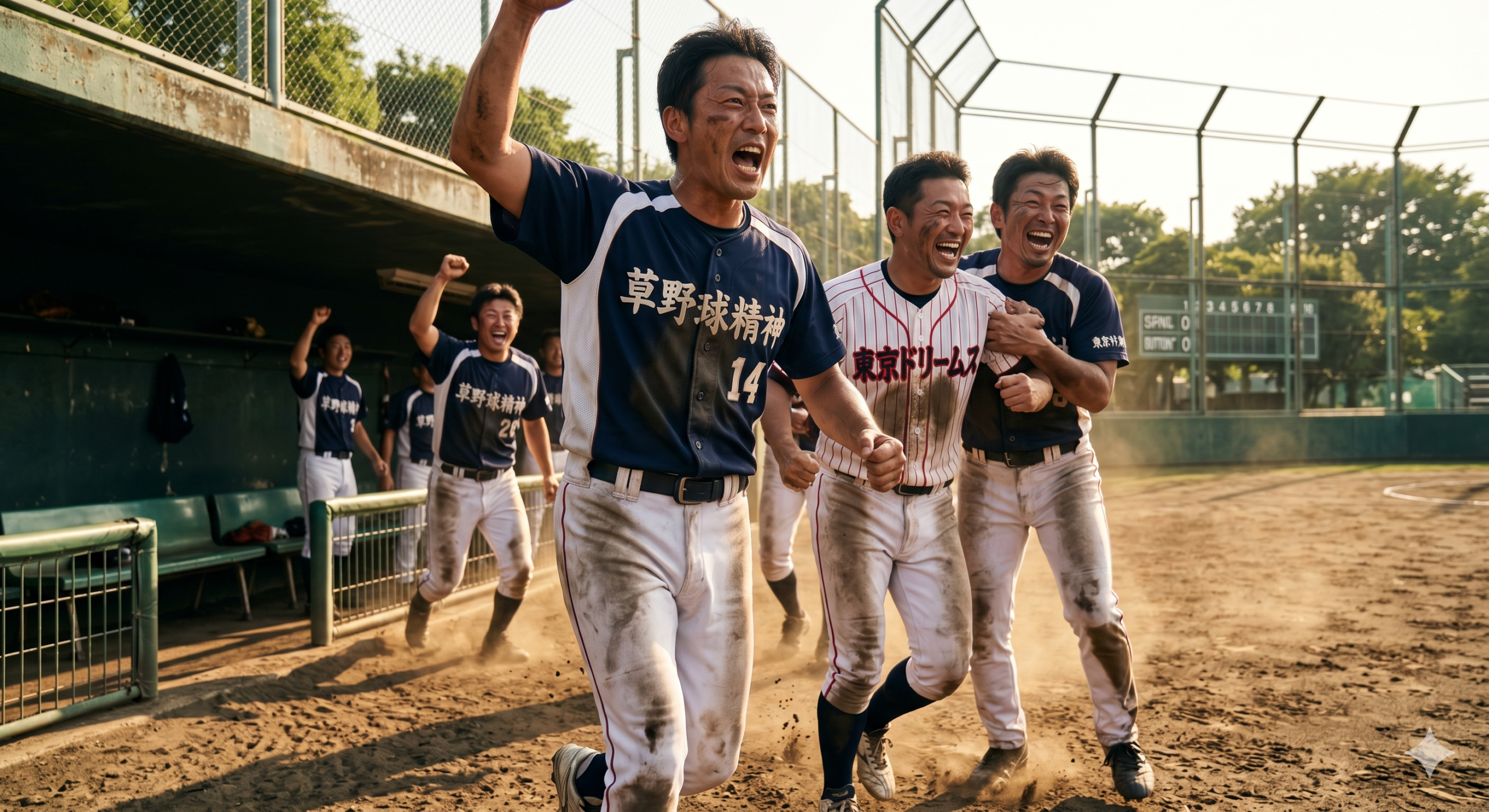

For baseball players around the world, a brand-new leather glove is a symbol of pride, but also a massive headache. Breaking in a stiff, high-end glove usually takes months of painful catch play and oiling[cite: 1]. But in Japan’s caked-dirt Kusa-Baseball culture, we accelerate this entire process using a mind-blowing, century-old artisan technique known as Yomomi (Hot Water Molding)[cite: 1].
The Ultimate Baseball Paradox: Water Meets Leather
To any traditional ballplayer, the absolute number one rule of glove care is to keep it away from moisture at all costs[cite: 1]. Water ruins the natural oils, hardens the leather, and destroys the structure of the pocket[cite: 1]. Yet, a master Japanese glove craftsman completely defies this logic by taking a pristine, expensive glove and plunging it directly into a steaming vat of hot water[cite: 1].
This radical process is not a random gimmick; it is an incredibly precise science caked in tradition[cite: 1]. The hot water relaxes the tight leather fibers and softens the interior grease, making the pocket highly malleable[cite: 1]. In the hands of a true expert, a process that usually takes a full season is beautifully executed in a matter of minutes[cite: 1].
The Craftsmanship of the Shokunin Master
Once the glove is pulled from the water, the real magic of the Shokunin (artisan) begins[cite: 1]. The master places the wet leather onto a wooden anvil and pounds it violently with a heavy wooden mallet[cite: 1]. They stretch the finger slots, flex the hinges, and sculpt a flawless pocket tailored exactly to the player’s position[cite: 1].
“A glove shouldn’t be an extension of your hand; it should feel like it was born as a part of your body from the very first inning.”
The glove is then carefully dried in a temperature-controlled oven to lock in the newly caked shape[cite: 1]. When you slide your hand into a finished Yomomi glove, the stiffness is entirely gone[cite: 1]. It retains its deep structural integrity but feels as soft and responsive as an old, caked-in-mud favorite[cite: 1].
Shaping the Pocket with Precision
Weekend warriors in Japan gladly pay a premium to have their custom leather processed by these legendary masters[cite: 1]. Whether you are a middle infielder needing a shallow pocket for rapid transfers, or an outfielder wanting a deep web to secure liners, the artisan shapes the leather to your exact tactical strategy[cite: 1]. It represents the absolute pinnacle of our league’s obsession with high-end gear tech[cite: 1].
A Rite of Passage for Weekend Warriors
This incredible attention to detail is why Japanese amateur baseball operates in an entirely different dimension[cite: 1]. A regular salaryman doesn’t just buy a tool from a store; they participate in a beautiful ritual to perfect their weapon[cite: 1]. The caked mud on our Sundays is always met with the deep caked traditions of the craftsmen who support our obsession[cite: 1].
As we advance further down our grand 105-article roadmap, we will unlock more gear secrets caked inside our culture[cite: 1]. From the science of the rubber ball to the high-tech urethane bats, your view of amateur sports is about to change forever[cite: 1]. Stay tuned as we dig deeper into the soul of Kusa-Baseball[cite: 1].