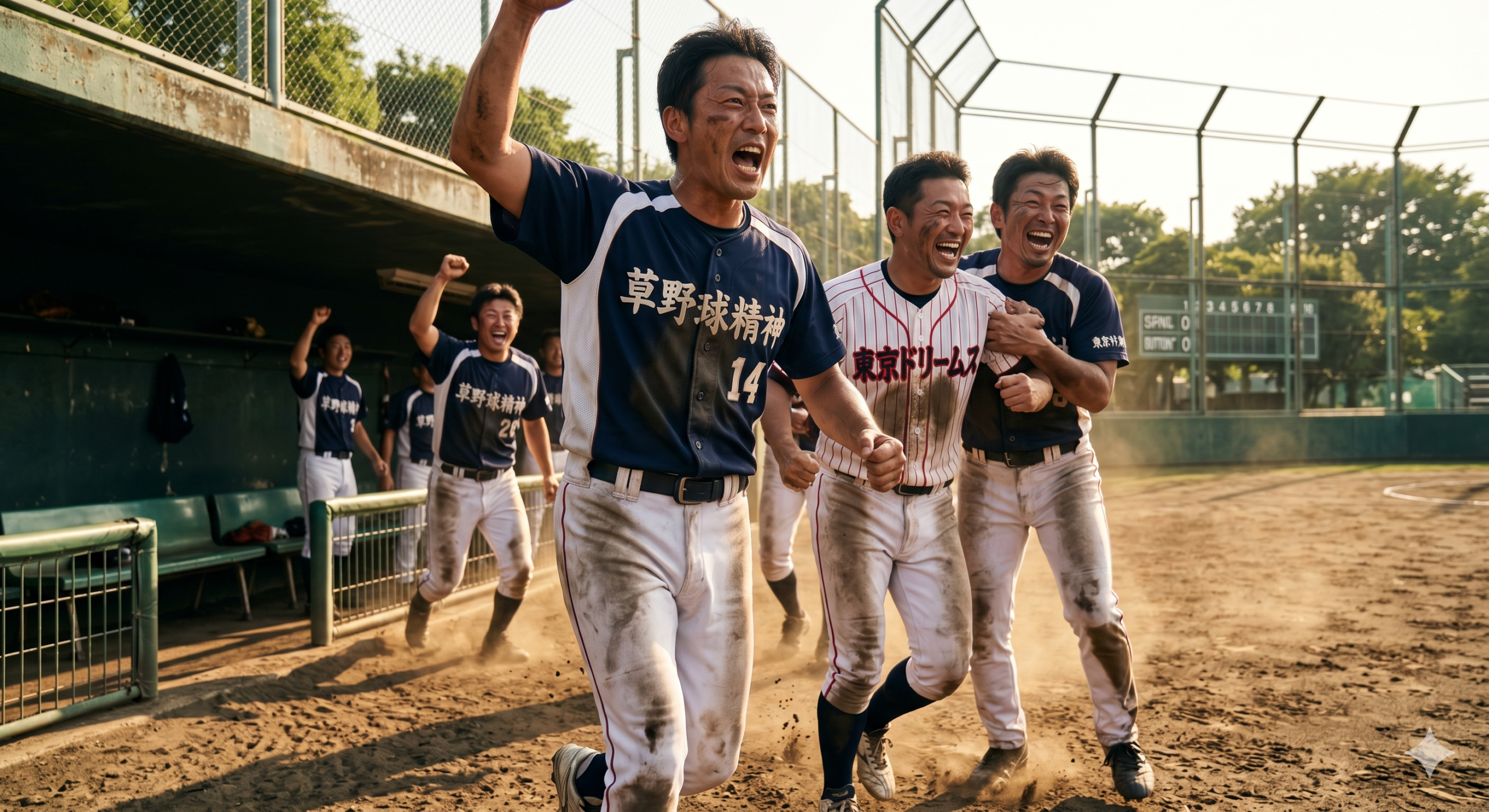

When international fans step into the world of Japanese baseball, they expect a familiar diamond with familiar rules[cite: 1]. However, as soon as the first pitch is thrown, the dugout erupts into a fascinating, rhythm-driven language that leaves many outsiders completely puzzled[cite: 1]. Welcome to the ultimate linguistic guide to Kusa-Baseball, where English words are uniquely reborn into pure Japanese passion[cite: 1].
The Linguistic Evolution of the Dugout
Japanese baseball language heavily utilizes a cultural phenomenon known as Wasei-Eigo (Japanese-made English)[cite: 1]. Over the past century, original American terms were imported, shortened, and combined to fit the rapid-fire rhythm of Japanese dugouts[cite: 1]. These words are no longer slang; they are official, universally respected expressions used from local parks to professional stadiums[cite: 1].
To help you navigate your first weekend game or live stream, we have compiled the most essential phrases that define our muddy subculture[cite: 1]. Understanding these terms will instantly bridge the gap between you and the local players[cite: 1].
20 Essential Kusa-Baseball Terms and Phrases
1. Gett-u (ゲッツー)
A direct, rhythmic compression of “get two.”[cite: 1] This is the universal term for a spectacular double play[cite: 1]. When a shortstop flips the ball to second to turn a twin killing, the entire bench screams this word with absolute ecstasy[cite: 1].
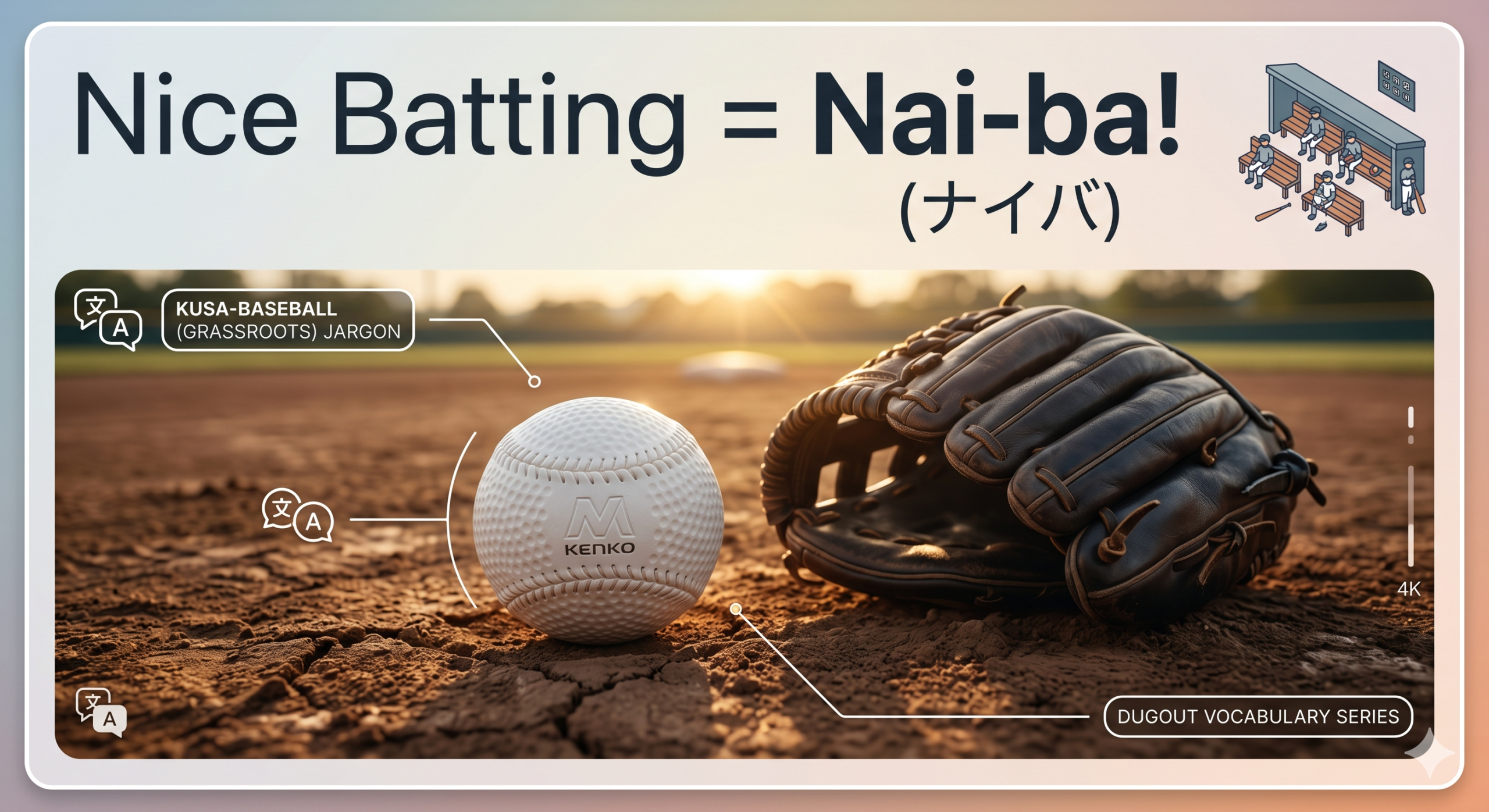
2. Nai-ba! (ナイバッ)
Short for “nice batting.”[cite: 1] This is the most common cheer shouted from the dugout to celebrate a solid hit, a sacrifice fly, or even a hard-fought foul ball[cite: 1]. It serves as a vital tool for team morale[cite: 1].
3. Nai-pi! (ナイピ)
Short for “nice pitch.”[cite: 1] Teammates bellow this from the bench to support their ace after a sharp breaking ball or a painting of the outside corner[cite: 1].
4. Deadball (デッドボール)
A classic piece of Japanese baseball vocabulary meaning a hit-by-pitch[cite: 1]. Despite sounding incredibly dangerous, it simply means a batter takes his base after being clipped by a ball[cite: 1].
5. Four Ball (フォアボール)
The standard Japanese expression for a base on balls or a walk[cite: 1]. It naturally counts the four balls required to earn a free pass[cite: 1].
“The beauty of Japanese baseball language lies in its rhythm; we don’t just speak words, we chant them to keep our collective spirit alive on the dirt.”
6. Straight (ストレート)
Amateurs and professionals alike rarely use the word “fastball.”[cite: 1] Instead, a clean, four-seam pitch is always referred to as a “straight.”[cite: 1]
7. Clean-up (クリーンアップ)
While Western leagues apply this strictly to the fourth hitter, Japan uses it to describe the powerhouse trio of the 3rd, 4th, and 5th batters combined[cite: 1]. Their job is to completely clean the bases caked with runners[cite: 1].
8. Don-mai! (ドンマイ)
Derived from “don’t mind.”[cite: 1] This is the ultimate supportive dugout phrase used to comfort a teammate after an error, a strikeout, or a costly misplay[cite: 1]. It translates directly to “no worries, shake it off!”[cite: 1]
9. Game Up (ゲームアップ)
Shouted by umpires and players to signal the absolute end of the ballgame[cite: 1]. It replaces the Western phrase “that’s the ballgame.”[cite: 1]
10. Touch Out (タッチアウト)
The standard expression for a runner being tagged out by a defender holding the ball[cite: 1].
The Remaining Ten Crucial Terms:
- 11. Shoot (シュート): A dynamic breaking pitch that tracks inward toward a right-handed batter’s hands[cite: 1].
- 12. Sayonara (サヨナラ): The legendary word for a thrilling walk-off victory[cite: 1].
- 13. Runner-up (ランナーアップ): Commonly used to designate the second-place finisher in a mega tournament hierarchy[cite: 1].
- 14. Back Net (バックネット): The protective chain-link fencing positioned directly behind home plate[cite: 1].
- 15. Liner (ライナー): A hard, screaming line drive hit sharply into the outfield gap[cite: 1].
- 16. Grounder (ゴロ): A standard ground ball caking across the infield dirt[cite: 1].
- 17. Deai-gashira (出会い頭): A surprise home run hit on the very first pitch of an at-bat[cite: 1].
- 18. Lucky Seven (ラッキーセブン): The sacred 7th inning where teams unleash massive chants and energy[cite: 1].
- 19. Nai-don! (ナイドン): Short for “nice driving” or “nice running,” screamed to reward great base running[cite: 1].
- 20. Hanseikai (反省会): The essential post-game review meeting, usually held over beer and yakitori at a local izakaya[cite: 1].
Reclaiming the Diamond Spirit
Mastering this glossary is your true ticket into the heart of our community[cite: 1]. Kusa-Baseball language is not about linguistic perfection; it is about sharing an intense, collective energy caked in dirt and mutual respect[cite: 1]. Step inside the fence, scream “Nai-ba!” with your full lungs, and immerse yourself in our beautiful universe[cite: 1].