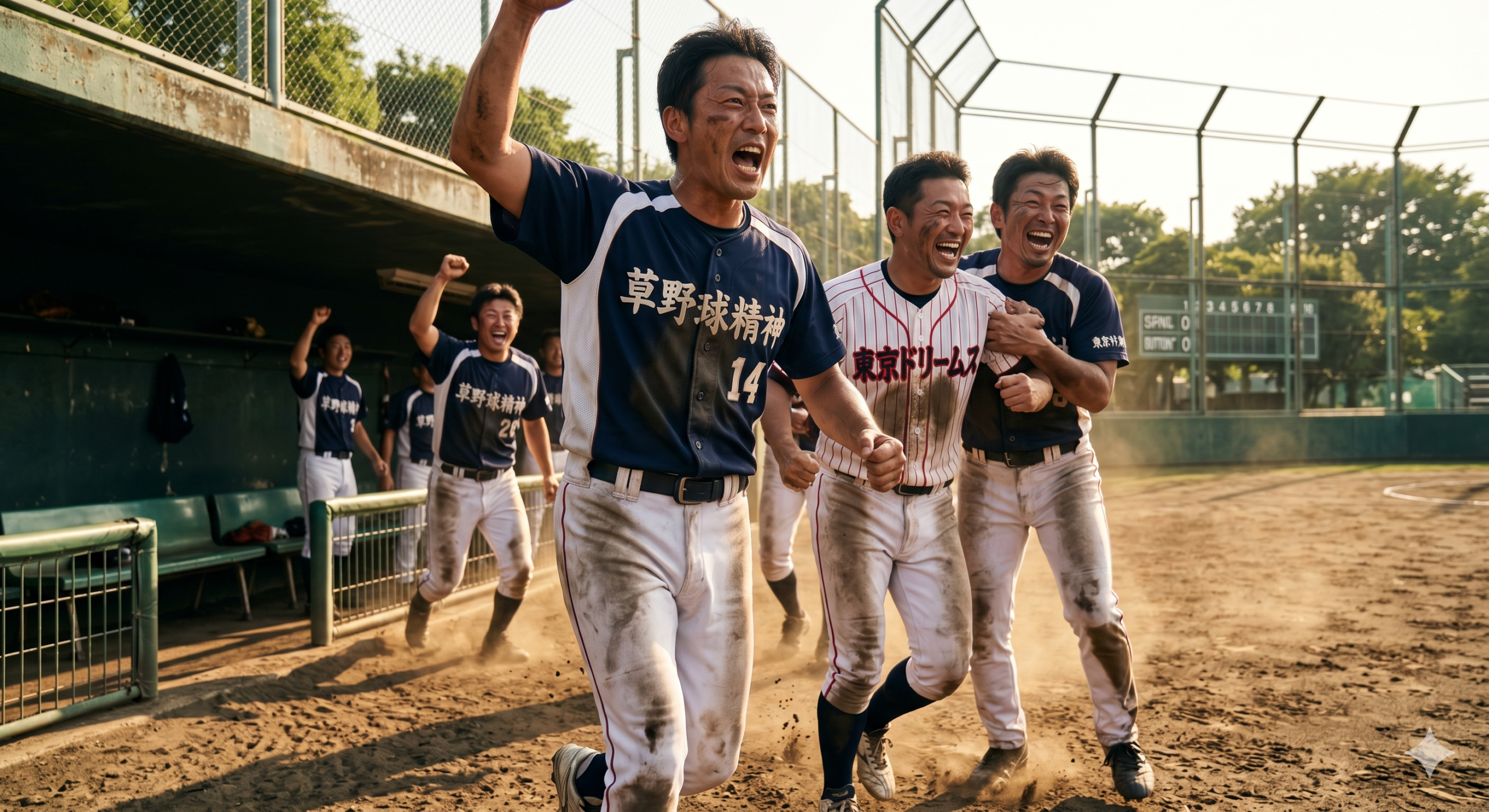

Every weekend in Japan, coaches and captains carry a massive, heavily worn black canvas duffel bag to the local diamonds[cite: 1]. To an outsider, it looks like an ordinary sports bag holding standard team gear[cite: 1]. But step closer, unzip the heavy brass zipper, and you will find a fascinating treasure chest caked in the deep history, unique habits, and subtle wisdom of Kusa-Baseball[cite: 1].
The Gigantic Shared Vault of the Dugout
Unlike personal custom gloves, the team equipment bag holds the shared assets of the entire roster[cite: 1]. Inside, you will find an array of caked helmets, pristine catcher’s masks, and team bats communal to anyone caking their cleats on the weekend dirt[cite: 1]. It serves as a visual layout of a team’s journey through multiple competitive seasons[cite: 1].
The organization of this giant box is an art form in itself[cite: 1]. Younger players, or Kohai, often take deep pride in ensuring every piece of armor fits perfectly inside before departing the Kyujo (stadium)[cite: 1]. Packing it efficiently after a hard doublet-header requires tactical precision and deep respect for the equipment[cite: 1].
Cultural Curiosities Stashed Inside
Beyond the expected bats and safety guards, the team bag contains several highly distinct items that are uniquely Japanese[cite: 1]. These cultural curiosities are absolute essentials for surviving the intense heat and physical toll of amateur doubleheaders[cite: 1].
The Sacred Rosin Bag
Sitting in a dusty corner of the pouch is a white, heavily caked pouch of pine rosin[cite: 1]. Both pitchers and hitters slap this powder onto their hands to secure an absolute grip against the unique rubber ball[cite: 1]. The white cloud it creates in the morning sun is a staple aesthetic of the league[cite: 1].
The Magical “Cooling Spray”
No Japanese sports bag is ever complete without multiple canisters of pressurized Aerosol Cooling Spray[cite: 1]. When a ballplayer gets hit by a pitch or pulls a muscle, the trainer immediately coats the injury in this freezing mist[cite: 1]. The distinct, sharp hissing sound echoing from the dugout is a universal sign of mid-game treatment[cite: 1].
“The team bag is not just a tool for transportation; it is a living archive of shared victories, caked mud, and the unspoken bond of weekend warriors.”
A Shared Asset Caked in Memories
Ultimately, the collective care given to these shared tools reflects the foundational core values of Japanese sports culture[cite: 1]. Wiping down the collective helmets and sorting the shared bats after the final out ensures the team stays grounded[cite: 1]. Every tear in the canvas bag tells a story of hustle, community, and an unyielding devotion to the game[cite: 1].