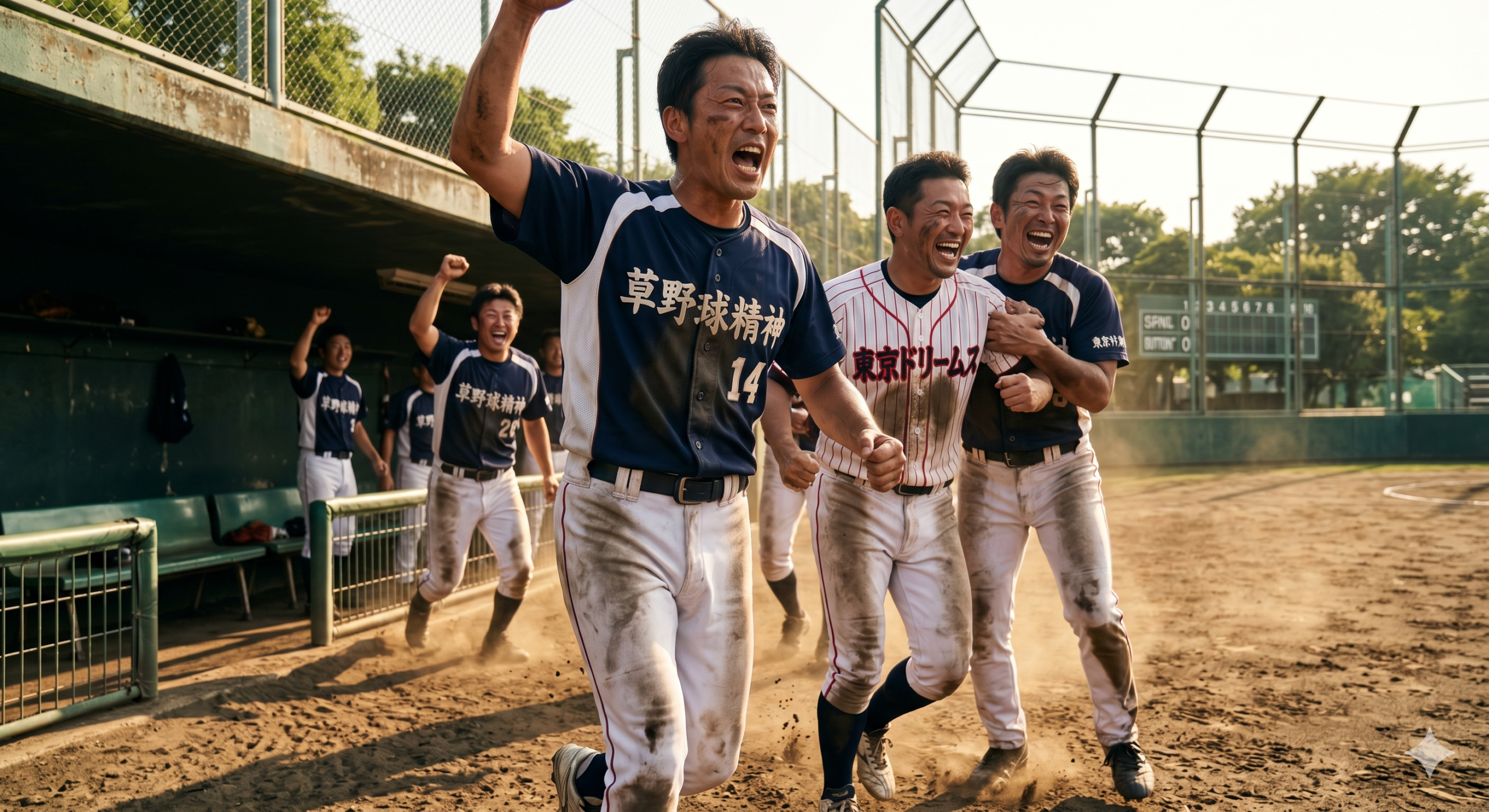

When you watch a casual weekend scrimmage in Japan, you might notice something peculiar about the man calling balls and strikes. He isn’t a certified official in a traditional black uniform, but an active player from the batting team. In the unique world of kusa-baseball, this cost-saving, trust-based system is a massive cultural staple known as Jimae-Shinpan (self-umpiring).
The Ultimate Test of Integrity Behind the Plate
During practice matches where hiring official federation umpires is too expensive, teams take turns providing the field officials. This role is often called Kogeki-Shinpan (offensive-side umpiring), meaning the team currently batting must supply the home plate judge. It places an everyday salaryman in an incredibly awkward psychological position.
Imagine standing behind the catcher, caked in sweat, tasked with judging a critical, borderline pitch thrown by your opponent. You desperately want your team to win, yet the unwritten code of Japanese sportsmanship demands absolute, painful fairness. A single biased call can ruin the mutual respect built between the two clubs.
The Mental Gymnastics of Calling Balls and Strikes
Because player-umpires fear being accused of favoritism, a fascinating paradox often unfolds on the riverbed diamonds. To prove their honesty, temporary umpires frequently give the benefit of the doubt to the opposing pitcher. This leads to hilarious moments where a batter gets called out on strikes by his own teammate, leading to playful groans from the dugout.
Conversely, if the player-umpire makes a tight call against the opponent, he risks getting intense stares from the pitcher’s mound. Balancing these dynamics requires incredible focus and a good sense of humor. Strap on the heavy black chest protector over a colorful custom jersey, and you instantly feel the heavy weight of the diamond’s judicial system.
Standing behind the plate as a player-umpire is a true test of character, balancing your desire to win with the sacred Japanese code of absolute fairness.
A Beautiful Display of Mutual Trust
What makes the Jimae-Shinpan system so beautiful is that it completely relies on the honor system. Arguments over close calls are incredibly rare because both dugouts understand the immense difficulty of the job. When a player finishes his stressful umpiring shift, he bows deeply to both benches, receiving warm applause for his service.
Ultimately, this unique umpire culture highlights the profound respect and self-governance embedded deep within Japanese grassroots sports. It proves that kusa-baseball isn’t just about athletic competition; it is a community bound by a shared love for the game and mutual trust. Next time you witness a player calling strikes against his own best friend, respect the hustle—he is keeping the spirit of fair play alive.