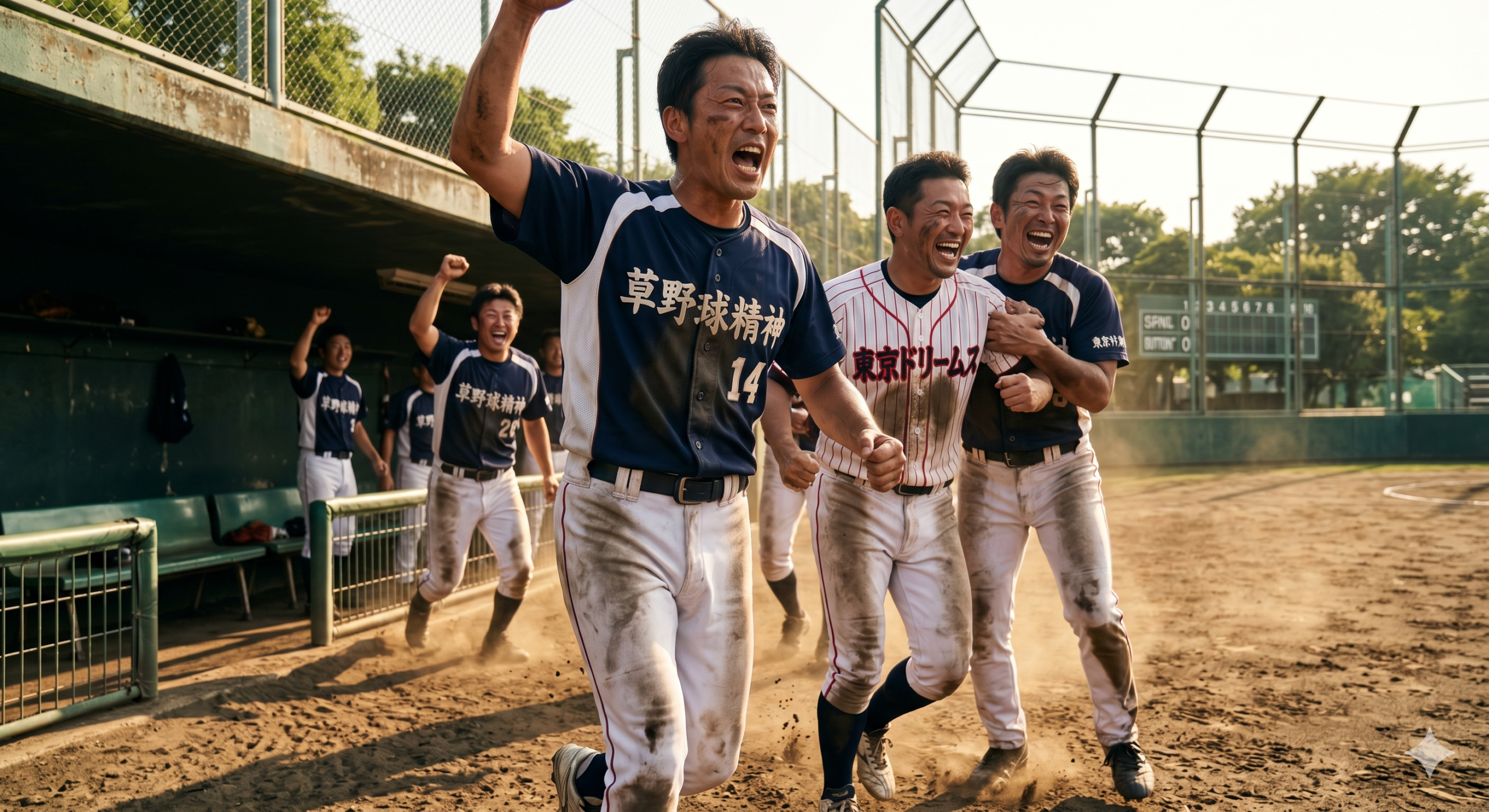

When you think of amateur weekend baseball, you probably imagine a relaxed atmosphere with loose regulations. However, if you enter an official tournament sanctioned by the JSBB (Japan Rubber Baseball Association), you will face a shockingly strict dress code. In the world of kusa-baseball, looking uniform isn’t just a recommendation—it is a legal requirement enforced down to the millimeter.
The Iron Fist of the Japan Rubber Baseball Association
To maintain the professional dignity of the sport, the JSBB enforces a massive rulebook that catches many international fans by surprise. Umpires will thoroughly inspect players before they even cross the white chalk lines. If your undershirt color doesn’t match your teammate’s, or if your pants are worn improperly, you might be disqualified on the spot.
This obsessive attention to detail creates an unmatched sense of order on the diamond. It reflects the deep-rooted Japanese sports philosophy where respecting the game begins with your appearance. Even as working professionals playing on a Sunday, players must hold themselves to elite structural standards.
The Pitcher’s Glove Crisis: No Multi-Colored Laces Allowed
The most notorious and highly debated regulation targets the defensive anchor: the pitcher. Under strict JSBB guidelines, a pitcher’s glove must be entirely uniform in color. This means that if your glove laces are a different shade than the leather shell, the umpire will banish that piece of gear from the mound.
For players who spend a fortune ordering custom, multi-colored gloves from legendary Japanese brands, this rule causes massive heartbreak. Flashy neon stitching or contrasting web designs are completely outlawed during official league tournaments. It forces serious kusa-baseball junkies to keep a dedicated, stoic “tournament glove” hidden away in their equipment bags.
In a JSBB tournament, your gear cannot shout louder than your performance. Tradition and uniformity reign supreme on the mound.
The Unification of the Entire Roster
The dress code extends far beyond the mound to the entire team roster. Every single player in the dugout must wear identical uniforms, socks, and caps down to the exact placement of team logos. Even the managers and coaches must be perfectly synchronized with the active squad on the field.
This strict unification transforms a group of everyday salarymen into a beautifully synchronized athletic machine. While it may seem excessive to foreigners, it breeds a powerful sense of community and shared destiny. When you look like a single, unbreakable unit, you play like one too.